How to Write a Letter of Recommendation (Template + Tips)
A letter of recommendation introduces a candidate or applicant to a hiring or entrance committee. Learn how to write a letter of recommendation, including tips on what to include and when to say no.
![[Featured image] A professor writes a letter of recommendation on their laptop in an office filled with bookshelves.](https://d3njjcbhbojbot.cloudfront.net/api/utilities/v1/imageproxy/https://images.ctfassets.net/wp1lcwdav1p1/4ZPgOzB6oFQGhA7ulrnKVg/f4e93cd144d4a8c94a1bd069dd99742f/writing_a_letter_of_recommendation.avif?w=1500&h=680&q=60&fit=fill&f=faces&fm=jpg&fl=progressive&auto=format%2Ccompress&dpr=1&w=1000)
Key takeaways
A letter of recommendation is written on an applicant's behalf by someone who can vouch for that person’s educational or professional performance.
Some tips for writing letters of recommendation include doing research, being specific, being positive, and following instructions.
How you write a letter of recommendation may differ depending on whether you are writing for a past employee or a current student.
You can use ChatGPT to help you write a letter of recommendation, but be aware that it might lack a personal, human touch.
Explore how to write a letter of recommendation for a coworker, friend, or student. Consider enrolling in the Good with Words: Writing and Editing Specialization from the University of Michigan on Coursera to help you craft a quality letter of recommendation. You'll learn creative ways to use syntax, techniques for adding nuance to your sentences and slogans, and tips to help you punctuate and paragraph like a professional.
How to write a letter of recommendation
Letters of recommendation help round out an application by offering insight into an applicant’s personal qualities, such as integrity, intellectual curiosity, or leadership potential. A strong letter of recommendation from a teacher, counselor, manager, or co-worker can help give an applicant an edge over the competition.
Letter of recommendation template
Use this template to get started writing a properly formatted recommendation.
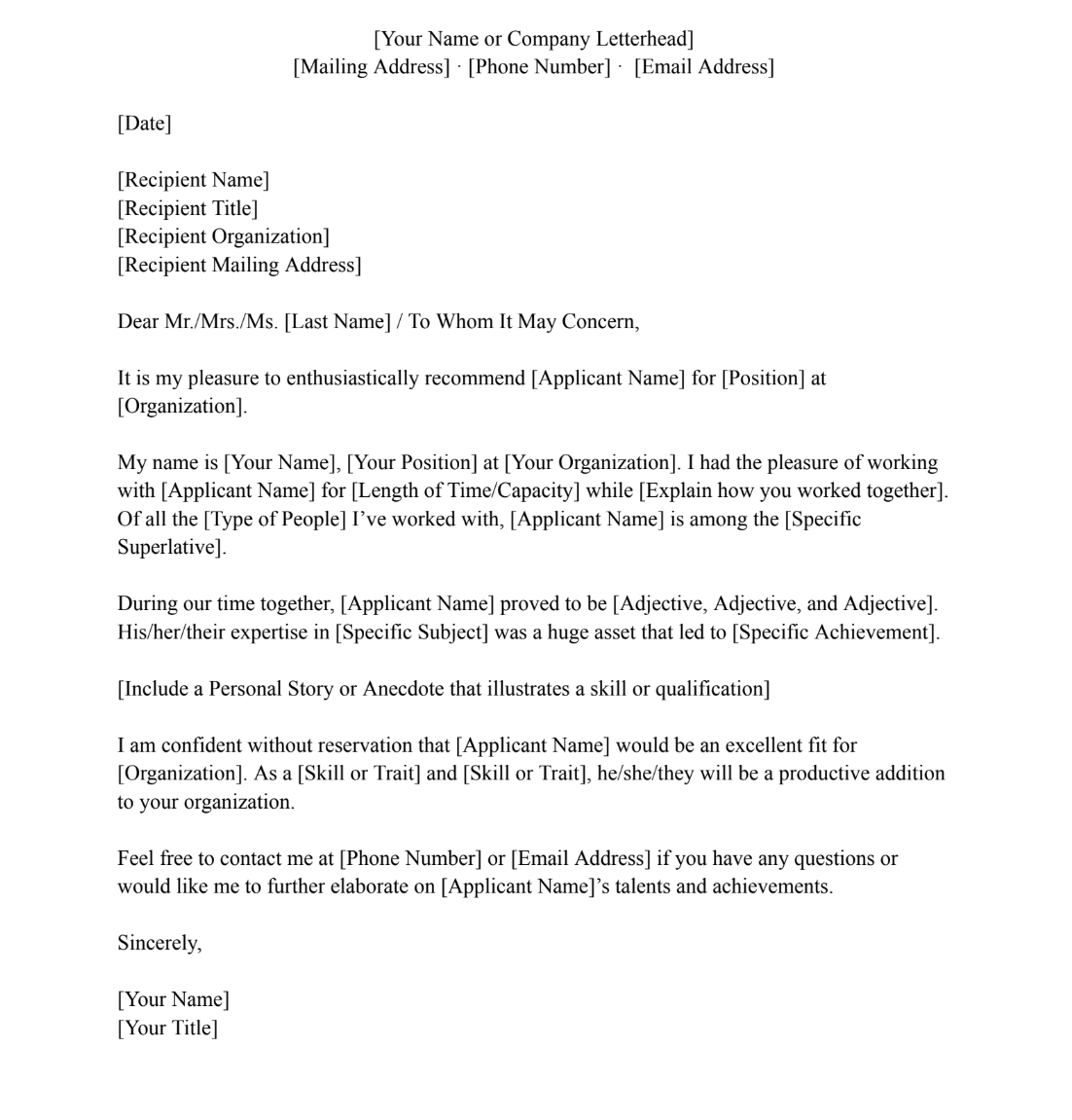
Letter of recommendation sample
Consider an example of a strong recommendation letter written using the template above.

How to format a letter of recommendation
Different organizations have different requirements for recommendation letters. Be sure to ask the requester about any specific guidelines. In general, a letter or recommendation can be broken down into the following sections:
Date
Recipient Name
Recipient Title
Recipient Address
Greeting: Address the recipient by name if possible (Dear Ms/Mr).
Personal introduction: Begin the body of your letter by introducing who you are and your relationship to the applicant.
Recommendation: What makes the candidate a good fit? Offer specific examples of skills or qualifications that match the role.
Anecdote or example: Include a personal anecdote about what it’s like to work with the candidate. Include any workplace or people skills you’ve observed them to possess.
Closing: Give an overview of why you’d recommend this person.
Contact information: Provide your email address and phone number so the recipient can follow up.
Signature
How to write a letter of recommendation for an employee
If you are writing a letter of recommendation for an employee you’ve managed, then you want to first take into account your experience with the applicant as someone you supervised. Consider how you worked with the employee, what strengths you observed, what projects they worked on under you, and if you can provide specific examples of their work ethic. All of these factors will help you write an informative and professional recommendation for your employee’s past experience.

How to write a good letter of recommendation: Tips for strong results
If you’re writing a recommendation letter, you likely want the candidate to have the best chance of getting a positive result. Explore some tips for writing a good letter that may stand out to admissions officers, potential employers, or anyone else reviewing the letter.
Do your research.
Find out what exactly the candidate is applying for. Ask them to provide:
A copy of the job description or academic program requirements
Their resume
Any achievements or qualifications they’d like you to highlight
This can help you focus your letter on the skills or qualifications that are specific to the role the candidate is applying for.
Be specific.
You can use a template (like the one above) to guide your writing, but remember to make it personal. Use examples and specific details to illustrate why this person is the best candidate. Choose strong, accurate adjectives over general terms or cliches.
Think about what the person reading the letter might want to know. Include details or insight that wouldn’t necessarily show up on an application. Your letter should help the recipient get to know the person you are recommending.
Stay positive.
Your recommendation should confirm that this candidate is a strong contender for whatever they’re applying for. Demonstrate honest enthusiasm and avoid any comments that could be construed in a negative light. If you can make a superlative comparison between this person and others you’ve worked with (for example, “She’s one of the best student aides I’ve had the pleasure to work with in my career as a professor.”), do so.
Keep it formal and concise.
Use a business letter format using a 12-point font size in either Arial or Times New Roman. Write your letter on your business or organization letterhead if possible. The recipient likely reads dozens, if not hundreds, of letters, so keep yours concise and to the point. Aim for at least one page but no more than two.
Say no if you need to.
If you feel like you’re unable to offer a glowing recommendation for a candidate, it’s possible you might want to say “no” to writing a letter. A mediocre endorsement can often do as much damage as a negative one. While it may feel uncomfortable, respectfully declining a request is perfectly acceptable.
Follow the instructions.
You’re vouching for this person. Be sure to follow any specific submission guidelines carefully and get your letter in on time (or early). If your letter makes a good impression, that will carry over to the candidate you endorse.
How to write a letter of recommendation for a student
When you want to write a letter of recommendation for a student applying for college or another academic program, you can help the admission board get a better sense of who the student is as a person, as well as their academic or career goals. Use concrete examples that highlight the student’s skills and best qualities and identify the student’s strengths. You can also highlight the student’s integrity, character, or leadership ability.
Is it okay to use ChatGPT to write a letter of recommendation?
ChatGPT can be a valuable tool when writing a letter of recommendation, but be aware that its use has benefits and drawbacks. The tool can provide an excellent starting point for your letter, providing a clear structure and professional language to compose the letter's text. It can also be helpful if you receive many requests and you frequently need to write letters of recommendation.
Be aware that text generated by ChatGPT lacks the personal touch many letters benefit from. The purpose of this letter is to express your specific experience and opinion of the applicant. Should you use ChatGPT to assist you in writing a letter of recommendation, it's crucial that you use it as a starting point, not as a final product.
Read more: How To Write ChatGPT Prompts
Explore our free career-building resources
As you prepare your letter of recommendation, get up-to-date on the latest skills and trends employers are looking for. Get insights into in-demand skills and career trends by subscribing to our LinkedIn newsletter, Career Chat. Check out the following free resources as well:
Take the quiz: Career Test: What Career is Right for Me Quiz?
Watch on YouTube: How to Craft a Resume with No Job Experience: Step by Step
Enhance your resume: AI Quick Tip: Enhance Your Resume with GenAI
Whether you want to develop a new skill, get comfortable with an in-demand technology, or advance your abilities, keep growing with a Coursera Plus subscription. You’ll get access to over 10,000 flexible courses.



Coursera Staff
Editorial Team
Coursera’s editorial team is comprised of highly experienced professional editors, writers, and fact...
This content has been made available for informational purposes only. Learners are advised to conduct additional research to ensure that courses and other credentials pursued meet their personal, professional, and financial goals.