Veterinary Courses
Veterinary courses can help you learn animal anatomy, physiology, diagnostics, and treatment protocols. You can build skills in surgical techniques, anesthesia management, and client communication. Many courses introduce tools like diagnostic imaging equipment, laboratory analysis software, and electronic health records, that support effective veterinary practice and patient care.
Popular Veterinary Courses and Certifications
 Status: Preview
University of Florida
Skills you'll gain: Medical Devices, Healthcare Ethics, Health Technology, Internet Of Things, Patient Safety, Healthcare Industry Knowledge, Telehealth, Vulnerability, Medical Privacy, Regulatory Compliance, Law, Regulation, and Compliance, Patient Advocacy, Security Awareness, Cybersecurity
 Status: Preview
Pontificia Universidad Católica de Chile
Skills you'll gain: Health Systems, Public Health, Infectious Diseases, Nutrition and Diet, Environmental Science, Epidemiology, Food Safety and Sanitation, Environment, Sustainable Development, Biology, Research and Design, Microbiology
 Status: Preview
National Taiwan University
Skills you'll gain: Nephrology, Dialysis, Critical Care, Infectious Diseases, Epidemiology, Medical Equipment and Technology, Chronic Diseases, Public Health, Health Care, Preventative Care, Surgery, Immunology, Health Policy
 Status: Free Trial
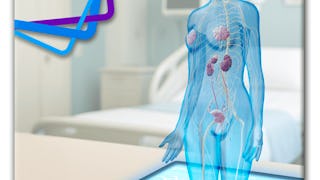
Skills you'll gain: Endocrinology, Nephrology, Urology, Gynecology, Physiology, Anatomy, Obstetrics And Gynecology, Neurology, Immunology, Pathology, Health Assessment
 Status: Preview
Universidad Nacional Autónoma de México
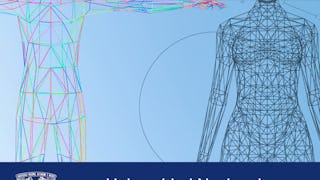
Skills you'll gain: Calipers, Micrometer, Systems Of Measurement, Patient Evaluation, Health Assessment, Nutritional Assessment, Laboratory Equipment, Anatomy, Estimation
 Status: NewStatus: Free Trial
Real Madrid Graduate School Universidad Europea
Skills you'll gain: AI Personalization, Medical Equipment and Technology, AI Enablement, Risk Modeling, Health Systems, Artificial Intelligence and Machine Learning (AI/ML), Physical Stamina, Accident Prevention, Predictive Modeling, Healthcare Ethics, Pediatrics, Emerging Technologies, Load Balancing, Real Time Data, Health Education, Machine Learning, Child Health, Biomedical Engineering, Data Modeling, Child Development
In summary, here are 6 of our most popular veterinary courses
- TECH MeD: Transdisciplinary Education for Critical Hacks of Medical Devices: University of Florida
- Una Salud: la salud humana, animal y de los ecosistemas: Pontificia Universidad Católica de Chile
- Pioneers of Medicine and Medical Breakthroughs in Taiwan: National Taiwan University
- Integrating Specialized Body Functions: Immersify
- Mediciones corporales para la salud: Universidad Nacional Autónoma de México
- IA en salud y prevención de lesiones: Real Madrid Graduate School Universidad Europea










