Cloud Computing Resume: Tips for Cloud Engineers and More
Looking for your next job? Learn what to include on your cloud computing resume with these tips and examples.
![[Featured Images] A photograph of a resume in the hands of a job applicant.](https://d3njjcbhbojbot.cloudfront.net/api/utilities/v1/imageproxy/https://images.ctfassets.net/wp1lcwdav1p1/1FgPQpjblku44yx6KJHJ4g/10e450aef5df9b8fce76e8b46f0bd8f9/GettyImages-1148778529.jpg?w=1500&h=680&q=60&fit=fill&f=faces&fm=jpg&fl=progressive&auto=format%2Ccompress&dpr=1&w=1000)
Key takeaways
Developing a strong cloud computing resume helps demonstrate your value to potential employers by highlighting your skills, experience, and expertise.
When writing your resume, tailor your experience and skills to highlight information most relevant to the cloud computing job you’re applying for.
Be mindful of including keywords on your resume to pass through applicant tracking systems.
You can include cloud computing certifications on your resume as an effective way to show your commitment to growing your skills in the field.
Discover how to craft an effective cloud computing resume. Looking to build cloud computing skills? Google Cloud Infrastructure for AWS Professionals Specialization can help you advance your abilities in application deployment, cloud infrastructure, containerization, load balancing, and more.
Cloud computing engineer resume
Your resume is your professional calling card that highlights the relevant work experience and skills that you bring to the job. Cloud computing professionals, such as cloud engineers and cloud architects, serve a vital role in designing and maintaining cloud systems for organizations.
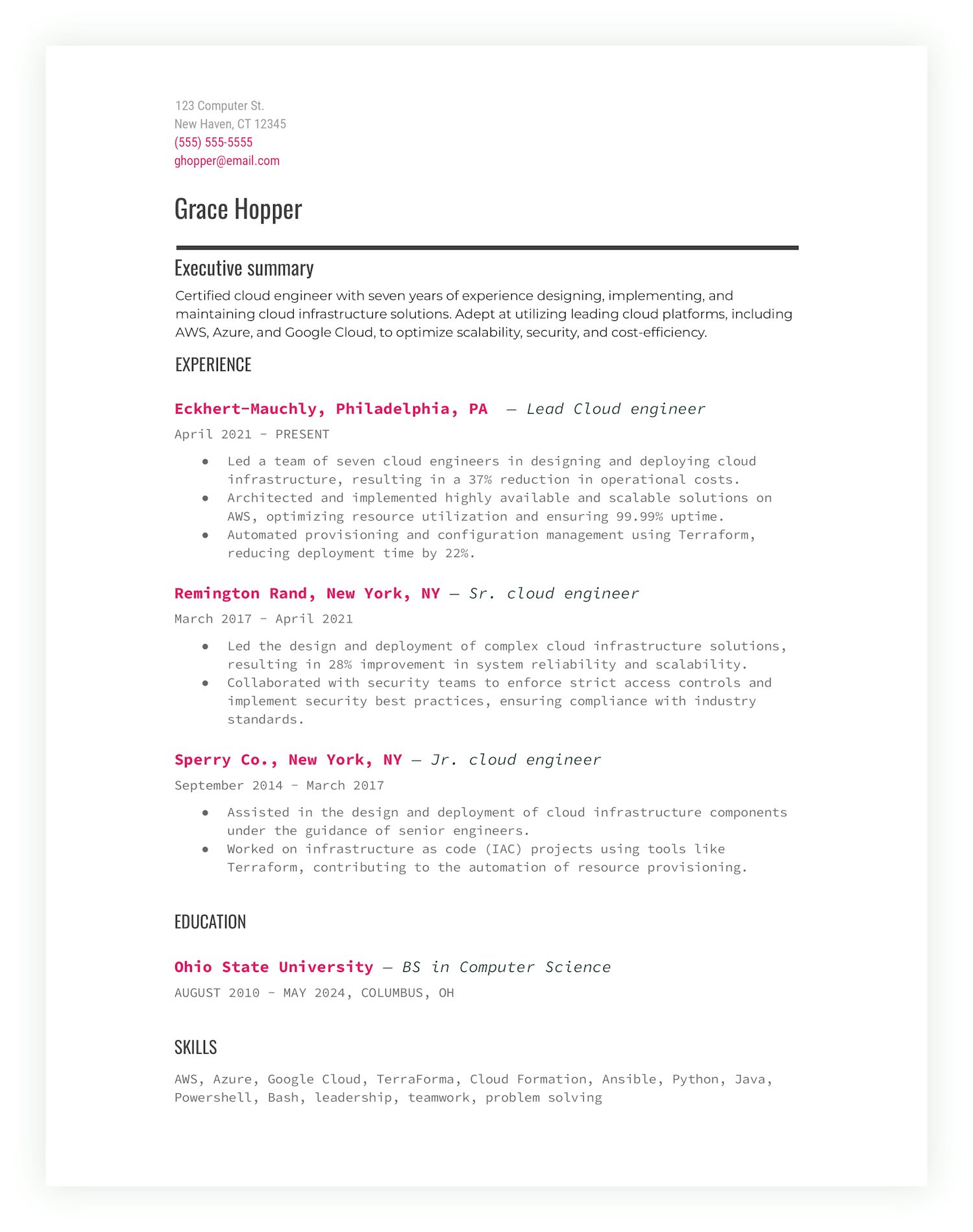
But how do you create an effective resume for a cloud computing job? Below, you’ll find a cloud engineer resume example, along with tips on how to make each section shine.
1. Include your contact information.
The top of your resume is reserved for your header, which should include your full name, phone number, and email address. These pieces of information are important to include because they’re the main way that a hiring manager will contact you to schedule an interview.
Other pieces of optional information you might include are your job title, such as “senior cloud engineer,” your personal website (if relevant), and a link to your LinkedIn profile. Typically, you should avoid including your home address unless explicitly requested to do so in a job posting, as this information is unnecessary and may actually count against you if your potential employer feels you live too far away.
Keep your header simple and easy to reference. It’s also a good idea to put your name in a larger font than the rest of your resume, typically between 18 and 29 points.
2. Write a cloud computing resume summary (or objective) relevant to cloud computing.
A resume summary provides a snapshot of your relevant work experience, accomplishments, and core strengths that you bring to a position. Your summary should be located near the top of your resume and consist of just two to five sentences, depending on your work experience. Typically, your summary should only be one to two sentences long if you have less than ten years of experience and three to five sentences if you have ten years or more of extensive experience.
The first sentence of your summary should indicate your work experience and highlight key job-relevant responsibilities that you’ve performed, such as “developing and implementing cloud solutions” or “managing cloud computing platforms.” The following sentence(s) should indicate relevant technical skills and accomplishments that align with the cloud computing job that you’re applying for. If you’re uncertain about what to emphasize in your summary, go through the job description for the position, identify the skills and experience you already possess, and emphasize those.
Early-career professionals with minimal prior experience may instead opt to write a “resume objective,” which follows the same format as a resume summary but instead emphasizes the types of opportunities they’re seeking. Nonetheless, you should make sure to connect your prior experience, such as previous coursework or internships, with the position’s responsibilities so recruiters can better imagine you doing the job.
Cloud computing resume example
Certified cloud engineer with seven years of experience designing, implementing, and maintaining cloud infrastructure solutions. Adept at utilizing leading cloud platforms, including AWS, Azure, and Google Cloud, to optimize scalability, security, and cost-efficiency.

3. Optimize your cloud computing experience resume section with relevant details.
As a cloud computing professional, you’ll likely be tasked with building and maintaining cloud infrastructure, such as by architecting cloud solutions or using programming languages to code cloud environments. As a result, your work will be critical to the functioning of an organization’s daily operations, so recruiters may scrutinize your past work experience to ensure you’re up to the task.
To demonstrate your suitability for the job, use the work experience section of your resume to highlight the job-relevant responsibilities, interpersonal and technical skills, and achievements you've demonstrated, honed, or obtained in previous positions. To identify the precise duties and skills you should highlight, go through the job description for the role to which you’re applying and identify those duties and skills that either reflect or align with your past experience.
Structure each work experience section with your job title, the name of the company for which you worked, and the years you worked there. Below this information, include three to five bullet points outlining the relevant duties and skills you identified previously by comparing your own experience with the job description.
In each bullet point, use action words to emphasize your responsibilities and focus on concrete achievements and outcomes. For example: “Designed new cloud-based architecture company-wide that reduced cloud outage by 34 percent.” Action-oriented language like this that connects to objective outcomes will help a recruiter better understand your previous experience and encourage them to see you performing the position at their organization.
4. Add a cloud computing resume skills section to emphasize your abilities.
The skills section of your resume is where you’ll get the chance to further highlight your job-relevant technical and people skills. This is also a good opportunity to add keywords that could improve your chances of being flagged by the applicant tracking system (ATS), which many organizations use to rank and filter candidates based on the frequency of certain words compared to the job description.
Your skills section should both reflect those you included in your work experience and also indicate other job-relevant skills that you possess. This section is usually referenced by recruiters at a glance, so put the most job-relevant, impactful, and impressive information toward the top. Curate the list, but don’t be afraid to include a few skills that may align with the position but aren’t required for it. These could help you stand out.
Some common skills you might list on a cloud computing or cloud engineer resume include:
Deep knowledge of cloud technology, such as Amazon Web Services (AWS), Microsoft Azure, Google Cloud, and IBM Cloud
Up-to-date knowledge of cybersecurity best practices and protocols, particularly for cloud-based data storage and management
Read more: Resume Keywords: How to Find the Right Words to Beat the ATS
5. Showcase your credentials.
The education and qualifications section of your cloud computing resume is where you’ll put your degrees and certifications. Many employers often prefer candidates with a relevant bachelor’s degree, such as a degree in computer science or a related field, so highlighting yours could help you get noticed by recruiters. While experienced professionals may just note their degree, graduation date, and any relevant honors or awards, recent graduates might also note relevant courses they took that prepared them for the position.
You may also choose to include job-relevant certifications or certificates in the education section of your resume. This can be a good way to show your continuing education efforts post-graduation or your preparedness for a role if you don’t have a college degree.
Some cloud certifications or certificates you might consider obtaining and highlighting on your resume include:
Microsoft Cloud Support Associate
Amazon Web Services (AWS) Solutions Architect - Associate
Microsoft Certified: Azure Fundamentals
Google Associate Cloud Engineer
IBM Certified Technical Advocate - Cloud v5
Cloud Security Alliance: Certificate of Cloud Security Knowledge (CCSK)
Explore our free cloud computing resources
Browse our Career Resource Hub for free tools ranging from career and skills assessments to learning roadmaps to resume and interview preparation tips and guidance. You might also consider checking out the following:
Receive guidance with Career Chat: Resume Time? We can help
Watch on YouTube: How to Craft a Resume with No Job Experience: Step by Step
Learn from an expert: Reimagining Work and Learning with AI: Expert Insights from Dr. Jules White
Accelerate your career growth with a Coursera Plus subscription. When you enroll in either the monthly or annual option, you’ll get access to over 10,000 courses.



Coursera Staff
Editorial Team
Coursera’s editorial team is comprised of highly experienced professional editors, writers, and fact...
This content has been made available for informational purposes only. Learners are advised to conduct additional research to ensure that courses and other credentials pursued meet their personal, professional, and financial goals.