• For Individuals
  • For Businesses
  • For Universities
  • For Governments
Degrees
Log In
Join for Free
  • Browse
  • Logistic Regression

Logistic Regression Courses

Logistic regression courses can help you learn statistical modeling, hypothesis testing, and the interpretation of coefficients. You can build skills in evaluating model performance, understanding odds ratios, and applying techniques like regularization to improve accuracy. Many courses introduce tools such as R, Python, and specialized libraries like scikit-learn, showing how these skills are used to analyze binary outcomes in various fields, including healthcare, finance, and marketing.


More to explore:

Popular Logistic Regression Courses and Certifications


  • Status: Free Trial
    Free Trial
    I

    Imperial College London

    Logistic Regression in R for Public Health

    Skills you'll gain: Logistic Regression, Descriptive Statistics, Exploratory Data Analysis, Regression Analysis, Statistics, Model Evaluation, R Programming, Statistical Modeling, Predictive Modeling, Statistical Analysis, Probability & Statistics, Public Health, Data Preprocessing

    4.8
    Rating, 4.8 out of 5 stars
    ·
    367 reviews

    Intermediate · Course · 1 - 4 Weeks

  • Status: Free Trial
    Free Trial
    U

    University of Michigan

    Logistic Regression and Prediction for Health Data

    Skills you'll gain: Logistic Regression, Model Evaluation, Statistical Inference, Predictive Analytics, R Programming, Statistical Modeling, Statistical Methods, Biostatistics, Regression Analysis, Statistical Analysis, Statistics, Statistical Hypothesis Testing, Data Analysis

    Intermediate · Course · 1 - 4 Weeks

  • Status: Free Trial
    Free Trial
    J

    Johns Hopkins University

    Regression Models

    Skills you'll gain: Regression Analysis, Statistical Analysis, Statistical Modeling, Logistic Regression, Data Analysis, Model Evaluation, Probability & Statistics, Statistical Inference

    4.4
    Rating, 4.4 out of 5 stars
    ·
    3.4K reviews

    Mixed · Course · 1 - 4 Weeks

  • C

    Coursera

    Logistic Regression with NumPy and Python

    Skills you'll gain: Matplotlib, Data Visualization, Seaborn, Logistic Regression, NumPy, Data Analysis, Jupyter, Data Science, Machine Learning, Machine Learning Algorithms, Python Programming, Supervised Learning, Classification Algorithms, Algorithms

    4.5
    Rating, 4.5 out of 5 stars
    ·
    396 reviews

    Beginner · Guided Project · Less Than 2 Hours

  • Status: Free Trial
    Free Trial
    G

    Google

    Regression Analysis: Simplify Complex Data Relationships

    Skills you'll gain: Regression Analysis, Logistic Regression, Statistical Hypothesis Testing, Data Analysis, Advanced Analytics, Statistical Analysis, Correlation Analysis, Analytical Skills, Business Analytics, Statistical Modeling, Model Evaluation, Variance Analysis, Predictive Modeling, Machine Learning, Python Programming

    4.7
    Rating, 4.7 out of 5 stars
    ·
    578 reviews

    Advanced · Course · 1 - 3 Months

  • Status: New
    New
    Status: Preview
    Preview
    E

    EDUCBA

    Logistic Regression Fundamentals: Analyze & Predict

    Skills you'll gain: Model Evaluation, Logistic Regression, SAS (Software), Predictive Modeling, Regression Analysis, Predictive Analytics, Feature Engineering, Analytics, Statistical Methods, Data Transformation, Statistical Modeling, Statistical Analysis, Business Analytics, Estimation, Probability

    Mixed · Course · 1 - 4 Weeks

What brings you to Coursera today?

  • Status: Free Trial
    Free Trial
    I

    IBM

    Machine Learning with Python

    Skills you'll gain: Unsupervised Learning, Supervised Learning, Model Evaluation, Regression Analysis, Scikit Learn (Machine Learning Library), Applied Machine Learning, Predictive Modeling, Machine Learning, Dimensionality Reduction, Decision Tree Learning, Python Programming, Logistic Regression, Classification Algorithms, Feature Engineering

    4.7
    Rating, 4.7 out of 5 stars
    ·
    18K reviews

    Intermediate · Course · 1 - 3 Months

  • Status: New
    New
    Status: Free Trial
    Free Trial
    D

    Duke University

    Data Modeling and Prediction with R

    Skills you'll gain: Data-Driven Decision-Making, Logistic Regression, Statistical Modeling, Model Evaluation, Predictive Modeling, Regression Analysis, R Programming, Statistics, Data Analysis, Probability & Statistics, Statistical Inference

    Beginner · Course · 1 - 4 Weeks

  • Status: Free Trial
    Free Trial
    D
    S

    Multiple educators

    Machine Learning

    Skills you'll gain: Unsupervised Learning, Supervised Learning, Transfer Learning, Machine Learning, Jupyter, Applied Machine Learning, Data Ethics, Decision Tree Learning, Model Evaluation, Tensorflow, Scikit Learn (Machine Learning Library), NumPy, Predictive Modeling, Deep Learning, Artificial Intelligence, Classification Algorithms, Reinforcement Learning, Random Forest Algorithm, Feature Engineering, Data Preprocessing

    4.9
    Rating, 4.9 out of 5 stars
    ·
    38K reviews

    Beginner · Specialization · 1 - 3 Months

  • C

    Coursera

    Predict Ad Clicks Using Logistic Regression and XG-Boost

    Skills you'll gain: Model Evaluation, Scikit Learn (Machine Learning Library), Data Visualization, Feature Engineering, Data Preprocessing, Customer Analysis, Predictive Modeling, Predictive Analytics, Marketing Analytics, Applied Machine Learning, Logistic Regression, Data Cleansing, Data Manipulation, Advertising, Digital Advertising, Performance Analysis, Machine Learning, Python Programming, Deep Learning

    4.6
    Rating, 4.6 out of 5 stars
    ·
    10 reviews

    Beginner · Guided Project · Less Than 2 Hours

  • Status: Free Trial
    Free Trial
    J

    Johns Hopkins University

    Multiple Regression Analysis in Public Health

    Skills you'll gain: Biostatistics, Regression Analysis, Logistic Regression, Statistical Methods, Public Health, Probability & Statistics, Statistical Analysis, Statistical Inference, Advanced Analytics, Statistical Modeling, Predictive Modeling, Model Evaluation

    4.7
    Rating, 4.7 out of 5 stars
    ·
    319 reviews

    Beginner · Course · 1 - 4 Weeks

  • Status: Free Trial
    Free Trial
    D

    DeepLearning.AI

    Supervised Machine Learning: Regression and Classification

    Skills you'll gain: Supervised Learning, Jupyter, Scikit Learn (Machine Learning Library), Machine Learning, NumPy, Predictive Modeling, Classification Algorithms, Feature Engineering, Artificial Intelligence, Model Evaluation, Data Preprocessing, Python Programming, Logistic Regression, Regression Analysis, Unsupervised Learning

    4.9
    Rating, 4.9 out of 5 stars
    ·
    31K reviews

    Beginner · Course · 1 - 4 Weeks

1234…52

In summary, here are 10 of our most popular logistic regression courses

  • Logistic Regression in R for Public Health: Imperial College London
  • Logistic Regression and Prediction for Health Data: University of Michigan
  • Regression Models: Johns Hopkins University
  • Logistic Regression with NumPy and Python: Coursera
  • Regression Analysis: Simplify Complex Data Relationships: Google
  • Logistic Regression Fundamentals: Analyze & Predict: EDUCBA
  • Machine Learning with Python: IBM
  • Data Modeling and Prediction with R: Duke University
  • Machine Learning: DeepLearning.AI
  • Predict Ad Clicks Using Logistic Regression and XG-Boost: Coursera

Skills you can learn in Probability And Statistics

R Programming (19)
Inference (16)
Linear Regression (12)
Statistical Analysis (12)
Statistical Inference (11)
Regression Analysis (10)
Biostatistics (9)
Bayesian (7)
Probability Distribution (7)
Bayesian Statistics (6)
Medical Statistics (6)

Frequently Asked Questions about Logistic Regression

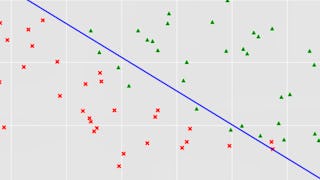
Logistic regression is a statistical method used for binary classification, which means it helps predict the outcome of a dependent variable based on one or more independent variables. It is particularly important because it allows businesses and researchers to understand relationships between variables and make informed decisions based on data. For instance, logistic regression can be used to predict whether a customer will purchase a product or not, based on their demographic information and past behavior.‎

With skills in logistic regression, you can pursue various roles in data analysis, statistics, and machine learning. Common job titles include Data Analyst, Data Scientist, Statistician, and Business Analyst. These positions often require the ability to interpret complex data sets and provide actionable insights, making logistic regression a valuable skill in many industries, including healthcare, finance, and marketing.‎

To effectively learn logistic regression, you should focus on developing a strong foundation in statistics and data analysis. Key skills include understanding probability, familiarity with statistical software (like R or Python), and the ability to interpret model outputs. Additionally, knowledge of data preprocessing techniques and experience with data visualization can enhance your ability to communicate findings effectively.‎

There are several excellent online courses available for learning logistic regression. For instance, you might consider Logistic Regression Fundamentals: Analyze & Predict for a comprehensive introduction. Additionally, courses like Logistic Regression and Prediction for Health Data and Python: Logistic Regression & Supervised ML offer specialized insights into applying logistic regression in different contexts.‎

Yes. You can start learning logistic regression on Coursera for free in two ways:

  1. Preview the first module of many logistic regression courses at no cost. This includes video lessons, readings, graded assignments, and Coursera Coach (where available).
  2. Start a 7-day free trial for Specializations or Coursera Plus. This gives you full access to all course content across eligible programs within the timeframe of your trial.

If you want to keep learning, earn a certificate in logistic regression, or unlock full course access after the preview or trial, you can upgrade or apply for financial aid.‎

To learn logistic regression, start by enrolling in an online course that fits your learning style. Engage with the course materials, complete exercises, and practice coding if applicable. Additionally, consider working on real-world projects or datasets to apply what you've learned. Joining online forums or study groups can also provide support and enhance your understanding.‎

Typical topics covered in logistic regression courses include the fundamentals of logistic regression, model fitting, interpretation of coefficients, evaluation metrics (like accuracy and ROC curves), and practical applications in various fields. Some courses may also explore advanced topics such as regularization techniques and the use of logistic regression in machine learning frameworks.‎

For training and upskilling employees, courses like Logistic Regression with SAS: Build & Evaluate Models and SPSS: Apply & Interpret Logistic Regression Models are particularly beneficial. These courses provide practical skills that can be directly applied in the workplace, helping teams leverage data for better decision-making.‎

This FAQ content has been made available for informational purposes only. Learners are advised to conduct additional research to ensure that courses and other credentials pursued meet their personal, professional, and financial goals.

Other topics to explore

Arts and Humanities
338 courses
Business
1095 courses
Computer Science
668 courses
Data Science
425 courses
Information Technology
145 courses
Health
471 courses
Math and Logic
70 courses
Personal Development
137 courses
Physical Science and Engineering
413 courses
Social Sciences
401 courses
Language Learning
150 courses

Coursera Footer

Skills

  • Artificial Intelligence (AI)
  • Cybersecurity
  • Data Analytics
  • Digital Marketing
  • English Speaking
  • Generative AI (GenAI)
  • Microsoft Excel
  • Microsoft Power BI
  • Project Management
  • Python

Certificates & Programs

  • Google Cybersecurity Certificate
  • Google Data Analytics Certificate
  • Google IT Support Certificate
  • Google Project Management Certificate
  • Google UX Design Certificate
  • IBM Data Analyst Certificate
  • IBM Data Science Certificate
  • Machine Learning Certificate
  • Microsoft Power BI Data Analyst Certificate
  • UI / UX Design Certificate

Industries & Careers

  • Business
  • Computer Science
  • Data Science
  • Education & Teaching
  • Engineering
  • Finance
  • Healthcare
  • Human Resources (HR)
  • Information Technology (IT)
  • Marketing

Career Resources

  • Career Aptitude Test
  • Examples of Strengths and Weaknesses for Job Interviews
  • High-Income Skills to Learn
  • How Does Cryptocurrency Work?
  • How to Highlight Duplicates in Google Sheets
  • How to Learn Artificial Intelligence
  • Popular Cybersecurity Certifications
  • Preparing for the PMP Certification
  • Signs You Will Get the Job After an Interview
  • What Is Artificial Intelligence?

Coursera

  • About
  • What We Offer
  • Leadership
  • Careers
  • Catalog
  • Coursera Plus
  • Professional Certificates
  • MasterTrack® Certificates
  • Degrees
  • For Enterprise
  • For Government
  • For Campus
  • Become a Partner
  • Social Impact
  • Free Courses
  • Share your Coursera learning story

Community

  • Learners
  • Partners
  • Beta Testers
  • Blog
  • The Coursera Podcast
  • Tech Blog

More

  • Press
  • Investors
  • Terms
  • Privacy
  • Help
  • Accessibility
  • Contact
  • Articles
  • Directory
  • Affiliates
  • Modern Slavery Statement
  • Do Not Sell/Share
Learn Anywhere
Download on the App Store
Get it on Google Play
Logo of Certified B Corporation
© 2025 Coursera Inc. All rights reserved.
  • Coursera Facebook
  • Coursera Linkedin
  • Coursera Twitter
  • Coursera YouTube
  • Coursera Instagram
  • Coursera TikTok